

What’s Really Going On Inside Your Recycling Bin?
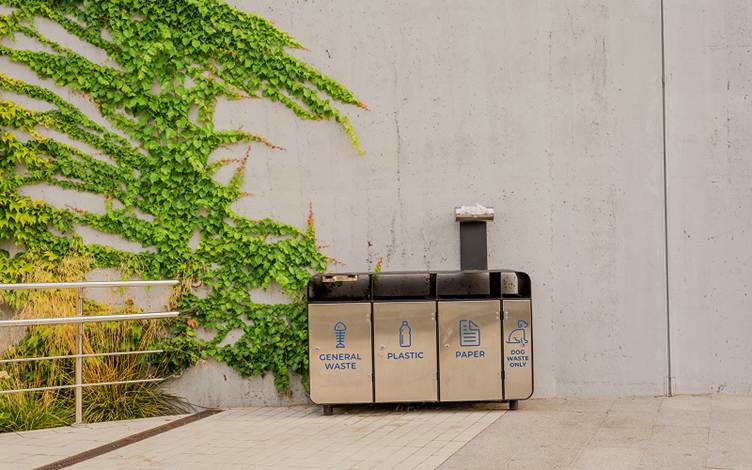
We’ve all been there—hovering over a recycling bin in Singapore with a coffee cup in one hand and a sense of guilt. These moments are surprisingly common in Singaporean households, offices, and hawker centres alike. Despite an increasing number of recycling bins popping up in neighbourhoods and malls, confusion remains widespread. With Singapore’s national recycling rate for domestic waste hovering around 13%, it’s clear that good intentions alone aren’t enough. The recycling bin in Singapore often ends up as a catch-all for both recyclables and contaminants.
Rinse, Remove, Recycle?
Perhaps the biggest myth about recycling in Singapore is the belief that “anything vaguely paper, plastic, or metal can go in the bin.” That’s not entirely true. The recycling bin in Singapore’s void decks and commercial spaces is part of a commingled recycling system. It accepts paper, plastic, metal, and glass, but only if they’re clean and dry.
For example, a pizza box soaked with oil? That goes in the general waste, not the recycling bin. Likewise, plastic containers with food residue or sachets with foil linings are considered contaminants. Why? Because dirty items can ruin entire batches of recyclables, making sorting more difficult or even causing entire loads to be discarded.
Another common misconception is the idea that recycling is someone else’s responsibility once you toss it in. In reality, what you place inside the bin matters significantly. It was revealed that nearly 40% of what ends up in recycling bins is unrecyclable due to contamination.
And let’s not forget the e-waste conundrum. Old batteries, phone cables, and busted remotes often get dropped into general recycling bins when they require special collection points. Singapore now has dedicated e-waste collection channels under the Extended Producer Responsibility (EPR) framework. Mixing these items into regular recycling streams creates safety risks and system inefficiencies.
How to Use the Bin
So what should you do when standing in front of that blue bin? First, always remember the golden rule: clean and dry. Before tossing in your yoghurt cup, give it a quick rinse. That paper flyer? If it’s not soiled or glossy, it’s a green light. Cans and glass jars? Yes, if emptied.
On the “don’t” list: plastic bags clog machinery, tissues are often made from recycled fibres and contaminated with germs, and styrofoam containers are not accepted in most local facilities. Disposable utensils, straws, and plastic wrappers with mixed materials also fall under this no-go category.
What about those tricky items that sit in the grey area? Think bubble wrap, foil-lined chip bags, and certain takeout packaging. These are the maybes, and most often, it’s safer to toss them in the general waste unless marked recyclable.
Singapore’s approach to recycling requires a mix of responsibility and realistic sorting habits. A well-used recycling bin is a practical tool in achieving waste reduction goals. But it only works if we use it right.
Smarter Bins, Smarter Habits
Recycling in Singapore is undergoing a quiet but impactful transformation. The days of a simple open-top bin are fading, replaced by design-conscious, function-forward options. From pedal-operated bins to colour-coded, compartmentalised systems, there’s a growing emphasis on making bins user-friendly and fool-proof.
Companies have responded with recycling bin models in Singapore built for durability, hygiene, and intuitive usage. Their bins range from single-stream solutions to multi-sorting setups for schools, malls, and public institutions. These encourage users to engage meaningfully with the act of recycling.
But the shift doesn’t stop at design. Behavioural nudges are helping normalise responsible waste sorting. Even tech is getting in on the action, with some future-forward facilities exploring bins that use AI to detect non-recyclables or notify maintenance teams when full.
The trend is clear: recycling bins are no longer passive containers. They’re evolving into active participants in Singapore’s green journey. As the government targets a 70% recycling rate under its Zero Waste Masterplan, individual action will play a bigger role than ever. And the recycling bin in your office pantry or HDB corridor is a frontline player.
Bin It Right, Bin It Bright
So, what’s the real message here? The recycling bin in Singapore has become a daily opportunity to contribute, quietly and consistently, to the sustainability of our island home. When we misunderstand what goes inside, the system fails. But when we approach it with clarity, consistency, and a dash of patience, it works. Recycling needs to be functional, intuitive, and embedded into everyday habits. We can transform our passive recycling into active participation. The next time you toss something into a recycling bin in Singapore, ask yourself: is this the right item, in the right condition, in the right bin? If the answer’s yes, you’re already making a difference.
Think you’ve mastered the blue bin? Take a look with Ausko, and what you toss today could decide tomorrow’s landfill.
