

Hermetic Feedthrough Engineering for Sealed Electrical Connections
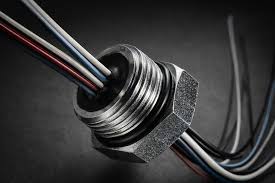
In modern high-performance systems, maintaining a perfect balance between environmental isolation and reliable electrical connectivity is a major engineering challenge. Industries such as aerospace, medical technology, semiconductor manufacturing, energy systems, and advanced industrial automation all depend on components that can safely transmit electrical signals through sealed environments. This is where the hermetic feedthrough becomes an essential engineering solution. A hermetic feedthrough enables electrical connections to pass through a sealed barrier without allowing gas, moisture, or contaminants to enter or escape, ensuring long-term stability and performance.
Understanding Hermetic Feedthrough Engineering
Hermetic feedthrough engineering is the specialized field focused on designing and manufacturing components that maintain airtight electrical connections across different environments. The core goal is simple but technically demanding: allow electricity or signals to pass through a sealed wall while preserving complete environmental integrity.
A hermetic feedthrough must perform two critical functions simultaneously. First, it must provide a reliable electrical pathway with minimal resistance or signal loss. Second, it must maintain a permanent hermetic seal that prevents leakage of gases or fluids even under extreme pressure, temperature changes, or vibration.
This dual requirement makes hermetic feedthrough design one of the most precise and demanding areas of engineering.
How Hermetic Feedthrough Systems Work
A hermetic feedthrough typically consists of three main components: conductive pins, insulating material, and a metal housing. The conductive pins carry electrical signals, while the insulating material-often ceramic or glass-prevents electrical shorting and maintains structural separation. The entire assembly is then bonded to a metal body using advanced sealing techniques such as brazing or glass-to-metal fusion.
The key to successful engineering lies in ensuring that all materials expand and contract at compatible rates during temperature changes. If thermal mismatch occurs, it can create micro-cracks or weaken the seal over time.
When properly designed, a hermetic feedthrough provides decades of stable performance even in harsh environments such as vacuum chambers or high-pressure systems.
PAVE Technology and Advanced Hermetic Engineering
In the field of precision engineering, PAVE Technology is recognized for developing high-quality hermetic feedthrough solutions designed for demanding industrial and scientific applications. Their engineering approach focuses on durability, precision, and long-term reliability.
PAVE Technology integrates advanced material science, precision machining, and rigorous testing methods to ensure that every feedthrough meets strict performance standards. Their solutions are widely used in aerospace systems, semiconductor fabrication equipment, medical devices, and industrial automation platforms.
By combining innovation with strict quality control, PAVE Technology ensures that each hermetic feedthrough performs reliably even under extreme environmental and electrical conditions.
Material Selection in Hermetic Feedthrough Design
Material selection is one of the most critical aspects of hermetic feedthrough engineering. Each material must serve a specific purpose while working in harmony with the others.
Ceramic materials such as alumina are commonly used as insulators due to their excellent dielectric strength, thermal resistance, and mechanical durability. Metals like stainless steel, titanium, and nickel alloys are used for housing and conductive elements because of their strength and corrosion resistance.
In some applications, glass-to-metal sealing is used to achieve ultra-high levels of hermeticity. This technique ensures a perfect bond between the insulating and conductive materials, reducing the risk of leakage or failure.
PAVE Technology applies strict material engineering standards to ensure that every hermetic feedthrough maintains optimal performance across a wide range of operating conditions.
Electrical Performance and Signal Integrity
A major engineering challenge in designing a hermetic feedthrough is maintaining high electrical performance while preserving a perfect seal. In many modern systems, feedthroughs must carry high-frequency signals, sensitive analog data, or high-power electrical currents.
Any impedance mismatch, signal loss, or electromagnetic interference can affect system performance. Therefore, engineers must carefully design conductor geometry, spacing, and shielding to ensure signal integrity.
Advanced designs also incorporate multi-pin configurations, allowing multiple signals to pass through a single sealed interface without cross-talk or interference.
PAVE Technology focuses on optimizing electrical performance in its feedthrough systems, ensuring that each hermetic feedthrough delivers stable and accurate signal transmission.
Applications in Aerospace Engineering
Aerospace systems represent one of the most demanding environments for hermetic feedthrough engineering. Spacecraft, satellites, and aircraft systems must operate under extreme conditions including vacuum, radiation, temperature fluctuations, and vibration.
A hermetic feedthrough is used in avionics systems, propulsion control units, and satellite communication modules to ensure reliable electrical connectivity without compromising internal protection.
Failure in any component can lead to mission-critical risks, making reliability essential.
PAVE Technology provides high-performance feedthrough solutions specifically designed for aerospace applications, where precision and durability are non-negotiable.
Medical Device Engineering Applications
In medical technology, hermetic sealing is essential for both safety and functionality. Devices such as pacemakers, cochlear implants, diagnostic equipment, and surgical tools rely on stable electrical connections that must remain isolated from bodily fluids and external contamination.
A hermetic feedthrough ensures that electrical signals pass safely into and out of sealed medical devices without compromising patient safety.
Long-term reliability is especially important for implantable devices, where replacement is difficult or impossible.
PAVE Technology supplies advanced feedthrough systems that meet strict medical engineering standards, ensuring safety, reliability, and biocompatibility.
Industrial and Energy Systems
Industrial environments often expose electronic systems to harsh conditions such as vibration, heat, moisture, and chemical exposure. In energy systems such as nuclear plants, oil and gas facilities, and renewable energy installations, reliability is critical.
A hermetic feedthrough allows control signals and power transmission while protecting sensitive internal electronics from environmental damage.
It plays a key role in maintaining system uptime and preventing costly failures in industrial operations.
PAVE Technology designs robust feedthrough solutions for industrial applications where durability and long service life are essential.
Engineering Challenges in Hermetic Feedthrough Design
Designing a hermetic feedthrough involves solving several complex engineering problems. One of the most significant challenges is achieving perfect sealing while maintaining electrical performance across multiple conductors.
Thermal expansion differences between materials can create stress points that may weaken the seal over time. Engineers must carefully match material properties and optimize structural design to prevent failure.
Another challenge is miniaturization. As modern devices become smaller, feedthroughs must support more connections in less space without sacrificing reliability.
Electromagnetic interference and high-frequency signal distortion are also critical considerations in advanced systems.
PAVE Technology addresses these challenges through advanced simulation tools, precision manufacturing, and extensive testing procedures.
Testing and Reliability Standards
To ensure long-term performance, every hermetic feedthrough must undergo rigorous testing. These tests simulate real-world conditions and verify structural, electrical, and environmental integrity.
Common tests include helium leak detection, thermal cycling, vibration testing, and dielectric strength evaluation. These processes ensure that the feedthrough can withstand extreme conditions without failure.
Quality assurance is a fundamental part of hermetic feedthrough engineering because even microscopic defects can lead to system failure.
PAVE Technology applies strict quality control protocols to ensure that each component meets international reliability standards before deployment.
Future of Hermetic Feedthrough Engineering
The future of hermetic feedthrough engineering is being shaped by advancements in materials science, microelectronics, and smart system integration. Devices are becoming smaller, faster, and more complex, requiring feedthrough systems that can handle higher densities and more demanding electrical requirements.
Smart monitoring capabilities are also emerging, allowing real-time detection of seal integrity and electrical performance. This enables predictive maintenance and reduces system downtime.
Advanced materials such as nano-ceramics and composite alloys are expected to further improve durability and thermal stability.
PAVE Technology is positioned at the forefront of these developments, continuously innovating to deliver next-generation hermetic feedthrough solutions for evolving engineering needs.
Conclusion
Hermetic feedthrough engineering is a critical discipline that enables reliable electrical connections in sealed and high-performance environments. By combining advanced materials, precision engineering, and rigorous testing, these components ensure safe and stable operation across aerospace, medical, industrial, and energy systems.
