

How Aluminum Die Casting Compares with Sand and Investment Casting
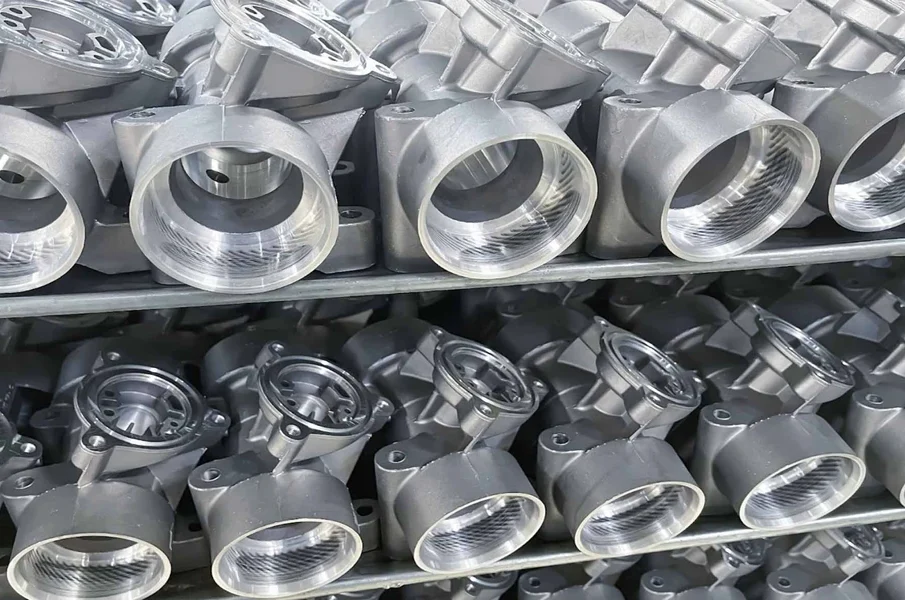
Aluminum can be cast in several ways, and the method you pick shapes almost everything that follows: tooling cost, lead time, wall thickness, surface finish, porosity risk and the amount of machining a part needs afterward. Aluminum die casting, sand casting and investment casting all turn molten metal into useful shapes, yet they suit very different volumes and designs. Buyers who understand the trade-offs early tend to avoid expensive tooling changes later.
The comparison is rarely about which process is “best.” It is about which one fits a specific part, a specific annual quantity and a specific set of tolerances.
How Does Aluminum Die Casting Work?
In high-pressure die casting, molten aluminum is injected into a hardened steel die at high speed and held under pressure while it solidifies. The die then opens, ejector pins push the part out, and the cycle repeats. Because the die is reusable for a very large number of shots, cycle times are short and part-to-part consistency is high.
The most common alloy in North American die casting is A380, an aluminum, silicon and copper alloy with roughly 7.5 to 9.5 percent silicon and 3 to 4 percent copper. Silicon gives the melt good fluidity, so it fills thin sections, while copper adds strength and hardness at some cost to corrosion resistance. Asian supply chains often specify ADC12, a Japanese grade usually treated as a close match for A383, which is a cousin of A380 with better resistance to hot cracking in thin, detailed walls.
What Makes Sand Casting Different?
Sand casting packs a bonded sand mixture around a pattern to form a mold cavity, which is broken apart after each pour. Patterns can be wood, plastic or metal, and they cost far less than a steel die. That low entry cost is the main reason an aluminum casting foundry will often recommend sand casting for prototypes, short runs and large parts that would need an enormous die.
The trade-offs show up on the finished part. Sand castings have a rougher surface, wider dimensional tolerances and thicker minimum walls than die castings. They also need more generous draft so the pattern can be drawn from the sand without tearing the mold. Alloys such as A356 are popular in sand and permanent mold work because they respond well to heat treatment, which can raise strength considerably.
Where Does Investment Casting Fit In?
Investment casting, sometimes called lost wax casting, starts with a wax replica of the part. The wax is coated in layers of ceramic slurry, the shell is dried, the wax is melted out, and molten metal is poured into the hollow ceramic mold. Each shell is used once.
This process produces excellent surface detail and can hold close tolerances on shapes that would be difficult to die cast, including undercuts and internal passages. Parts can often be designed with little or no draft. The downside is cost per piece and lead time: building wax patterns and ceramic shells takes several days per batch, so investment casting usually makes sense for moderate volumes of high-value parts rather than tens of thousands of housings.
Which Process Costs Less Over a Production Run?
Tooling and piece price pull in opposite directions. A die casting die is a significant up-front investment, but once it is paid for, each part is inexpensive because cycle times are measured in seconds. Sand casting reverses that equation: patterns are cheap, but every mold has to be made by hand or machine, and more machining is usually needed afterward.
A rough way to think about it:
- Sand casting suits prototypes, low volumes, very large parts and designs still likely to change.
- Investment casting suits moderate volumes, fine detail and parts where machining would otherwise be heavy.
- Aluminum die casting suits high volumes of small to medium parts with thin walls and repeatable geometry.
- Permanent mold casting sits between sand and die casting for medium runs that need heat-treated strength.
The break-even point depends on part size, complexity and annual demand, so an aluminum die casting manufacturer will typically model total cost over the expected life of the program rather than quoting tooling in isolation.
How Do Porosity and Draft Angles Affect Design Choices?
Porosity is the main technical weakness of high-pressure die casting. Metal enters the die so quickly that air and die lubricant vapors can become trapped, and shrinkage during solidification adds small voids of its own. For most housings and brackets this is acceptable, but it limits what you can do afterward. Conventional die castings are generally not recommended for full solution heat treatment or welding, because trapped gas expands when heated and can cause blisters or microcracks. Vacuum-assisted die casting and careful gate and overflow design reduce porosity when a part needs better integrity.
Draft is the other design factor buyers often underestimate. Die cast aluminum parts need a slight taper on walls parallel to the die opening so they release cleanly. A common rule of thumb is around half a degree to one degree on outside walls and more on inside walls and cores, because aluminum shrinks onto internal features as it cools; the exact figure depends on wall depth and the die caster’s guidance. Sand castings typically need more draft than that, while investment castings need the least.
When Should Machining Be Part of the Plan?
Almost no cast aluminum part ships without some secondary work. Sealing faces, bearing bores, threaded holes and datum surfaces usually require CNC machining to reach final tolerances. Die castings, being closer to net shape, need the least material removal, whereas sand castings carry extra machining stock to clean up their rougher surfaces.
That is one reason many buyers look for aluminum casting services that include machining, finishing and inspection under one quality system. Moving castings between separate vendors adds handling, extra fixturing and more room for tolerance stack-up. When casting and machining are planned together, datum features can be cast in deliberately, porosity-sensitive zones can be kept away from machined surfaces, and the result is a set of precision machined components that assemble without rework. An experienced aluminum die casting company will often suggest small geometry changes, such as moving a parting line or adjusting a wall, that cut machining time without affecting function.
Which Casting Method Fits Your Next Aluminum Part?
Start with annual volume and tolerance requirements, then weigh whether the part needs heat treatment, welding or pressure tightness, since those needs can push you away from conventional die casting. Sand casting keeps early costs low while a design is still changing, and investment casting earns its place when detail and accuracy matter more than piece price. For stable, high-volume designs with thin walls, die casting usually delivers the lowest total cost once tooling is spread across the run.
